
Detailing
From corrective refinement to ceramic protection and paint protection film — every surface is treated with the precision it warrants.
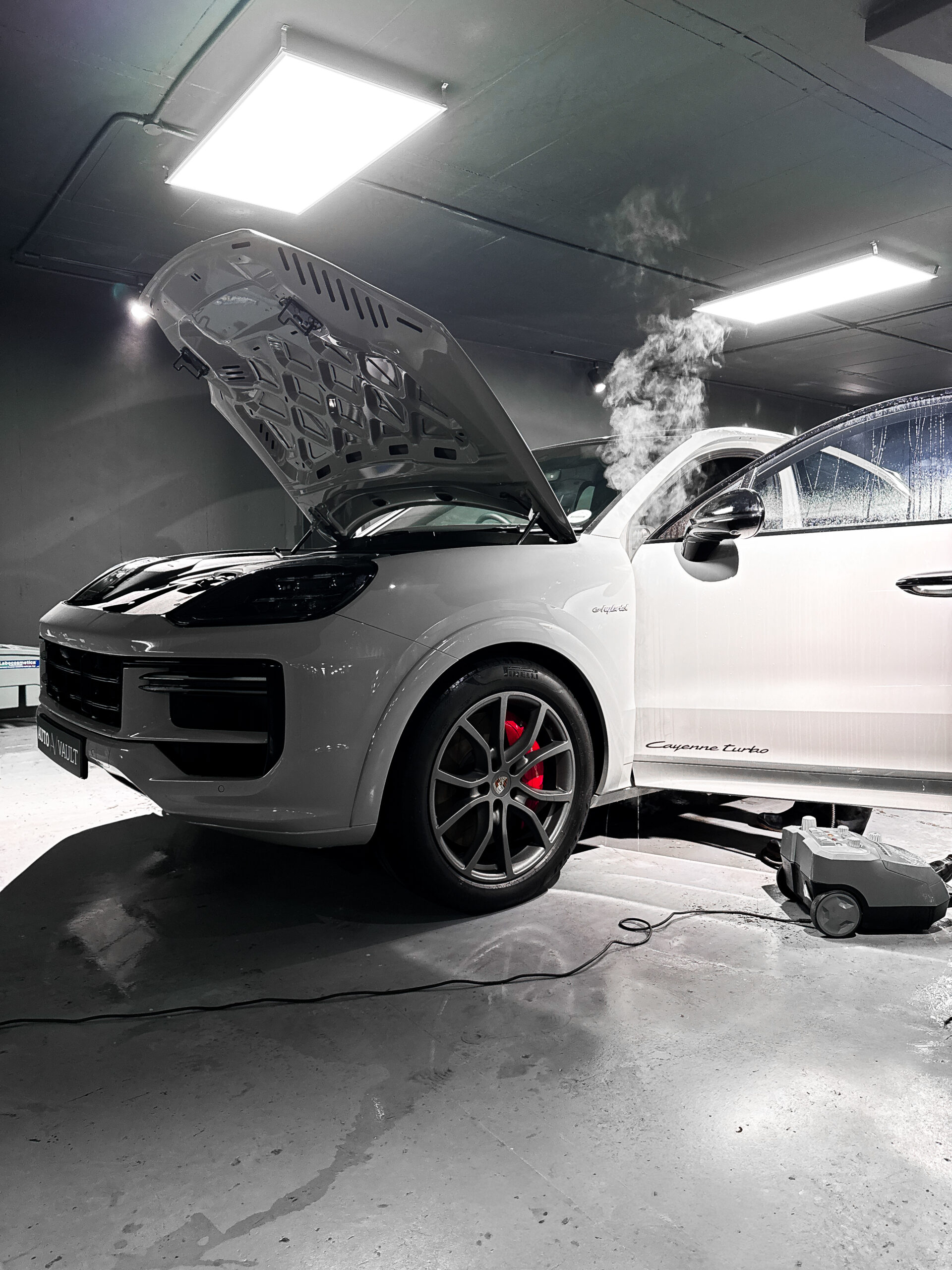
Car detailing in Pretoria — precision, not production
Condition is capital. Every defect left unaddressed, every protection window missed, is a cost that compounds quietly over time. For vehicles that warrant more than a car wash, Auto Vault's detailing service operates as an extension of the care — not a transaction alongside it.
All detailing work takes place in Brooklyn, Pretoria, by appointment only. Work is not produced in volume. Each vehicle is assessed individually, treated to the standard its paint demands, and returned without compromise.
The people behind the service came to detailing from years at the sharp end of South Africa's premium vehicle market. Read more about who we are.
Paint Refinement Multi-stage machine polishing
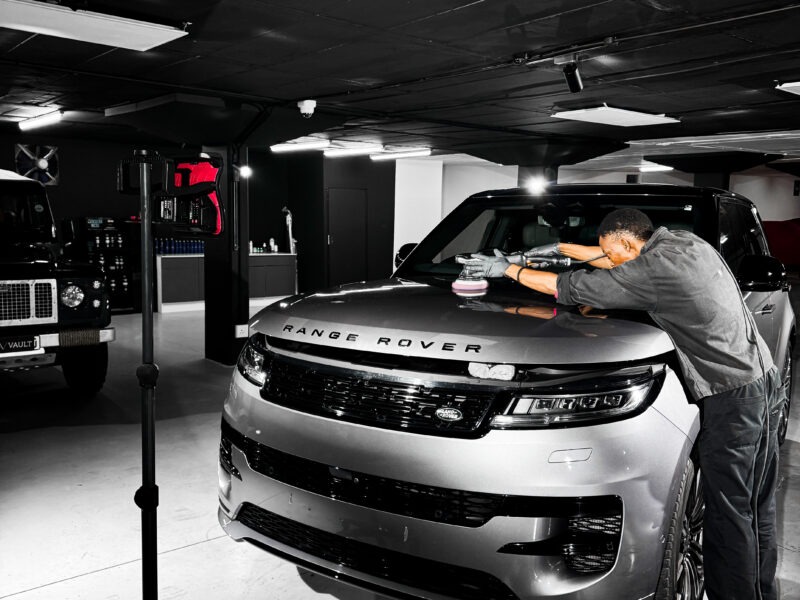
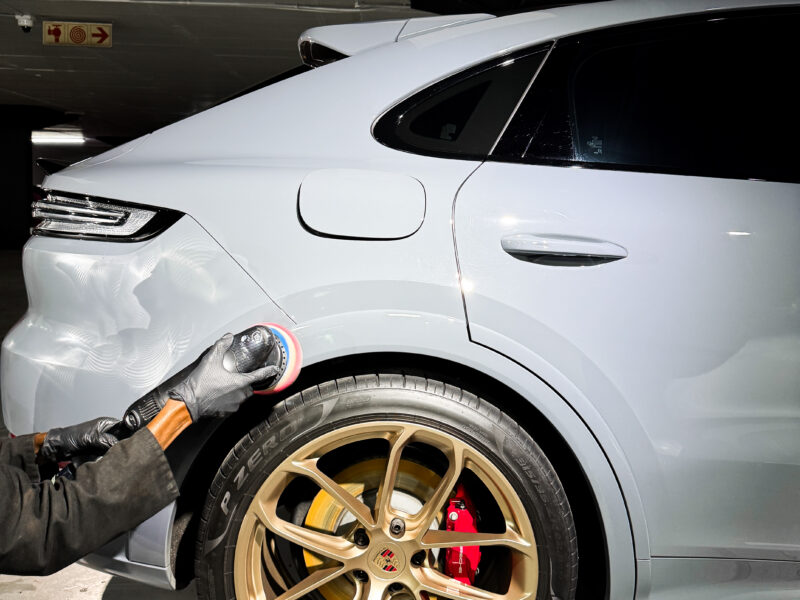
Multi-stage machine polishing that removes swirl marks, buffer trails, and oxidation at the source — restoring depth and clarity before any protection is applied.
Ceramic Coating Chemical bond with the clear coat
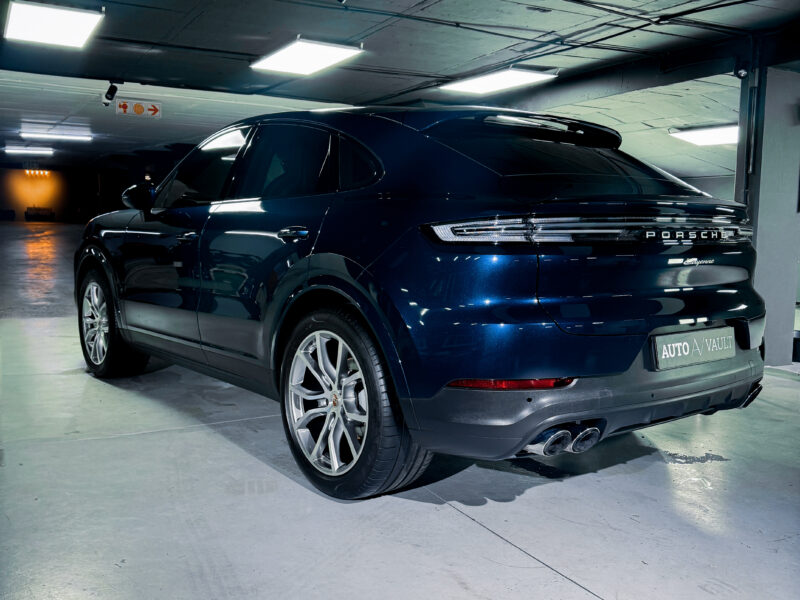
A chemical bond with the clear coat that provides long-term UV resistance, hydrophobic performance, and enhanced depth. Applied multi-stage on a corrected surface.
Paint Protection Film Sacrificial physical barrier
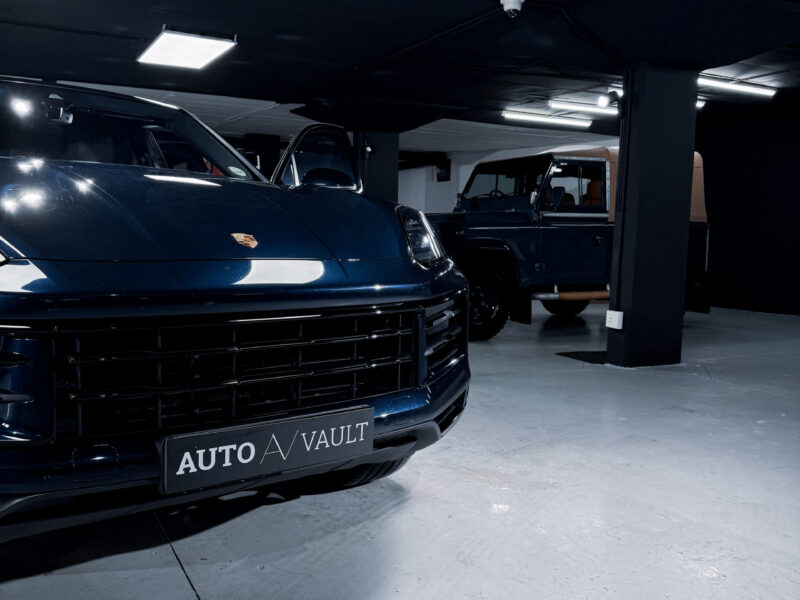
A sacrificial physical barrier against stone chips and road debris. Self-healing. Precision installed. Invisible when done correctly — effective where coating alone cannot protect.
Interior & Leather Conditioning and material protection
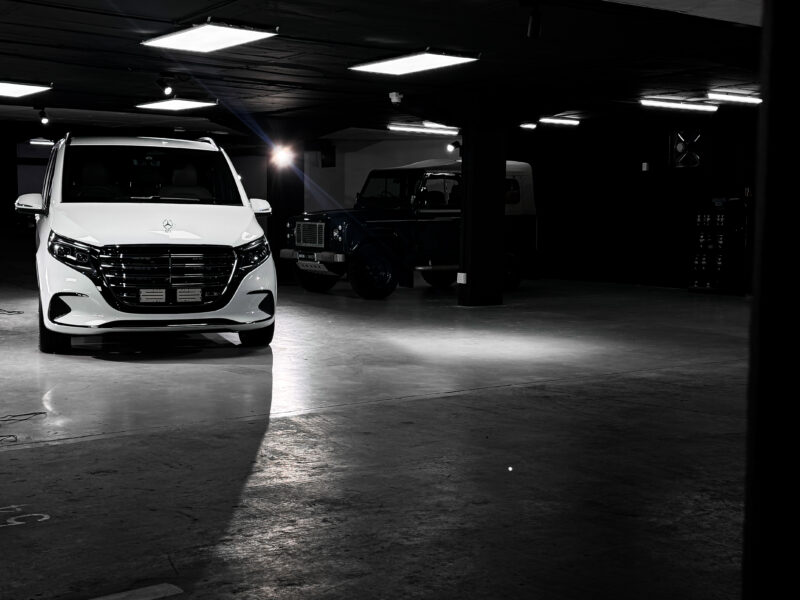
Conditioning, deep cleansing, and material-appropriate protection for leather, Alcantara, and trim. Preservation first — intervention only where it genuinely improves the outcome.
Paint correction and surface refinement
Paint correction is the foundation of any considered detailing programme. Before protection of any kind is applied, the existing surface is brought to a condition worthy of it.
The process begins with thorough decontamination — iron fallout removal, chemical cleansing, clay preparation. Paint depth is measured. Defects are mapped. Only then does machine polishing begin, in stages calibrated to the severity of correction required and the hardness of the specific paint system.
Done correctly, multi-stage correction removes swirl marks, buffer trails, water etching, and fine scratches at the source — restoring depth and clarity rather than disguising it. For vehicles being prepared for concours presentation, pre-sale photography, or long-term protection application, the standard of correction applied here is exacting.
Protection — ceramic coating and paint protection film
Once the paint surface is correct, the question is how to maintain what has been achieved.
Ceramic coating provides a chemical bond with the clear coat, offering long-term resistance to UV degradation, environmental contamination, and the micro-abrasion that dulls a finish over time. Application is multi-stage. Products are drawn from the Labocosmetica stable — including the Maniac line, Geist, and Aventore — selected for the specific vehicle, paint system, and intended use. Surface preparation before installation determines the outcome more than the product itself.
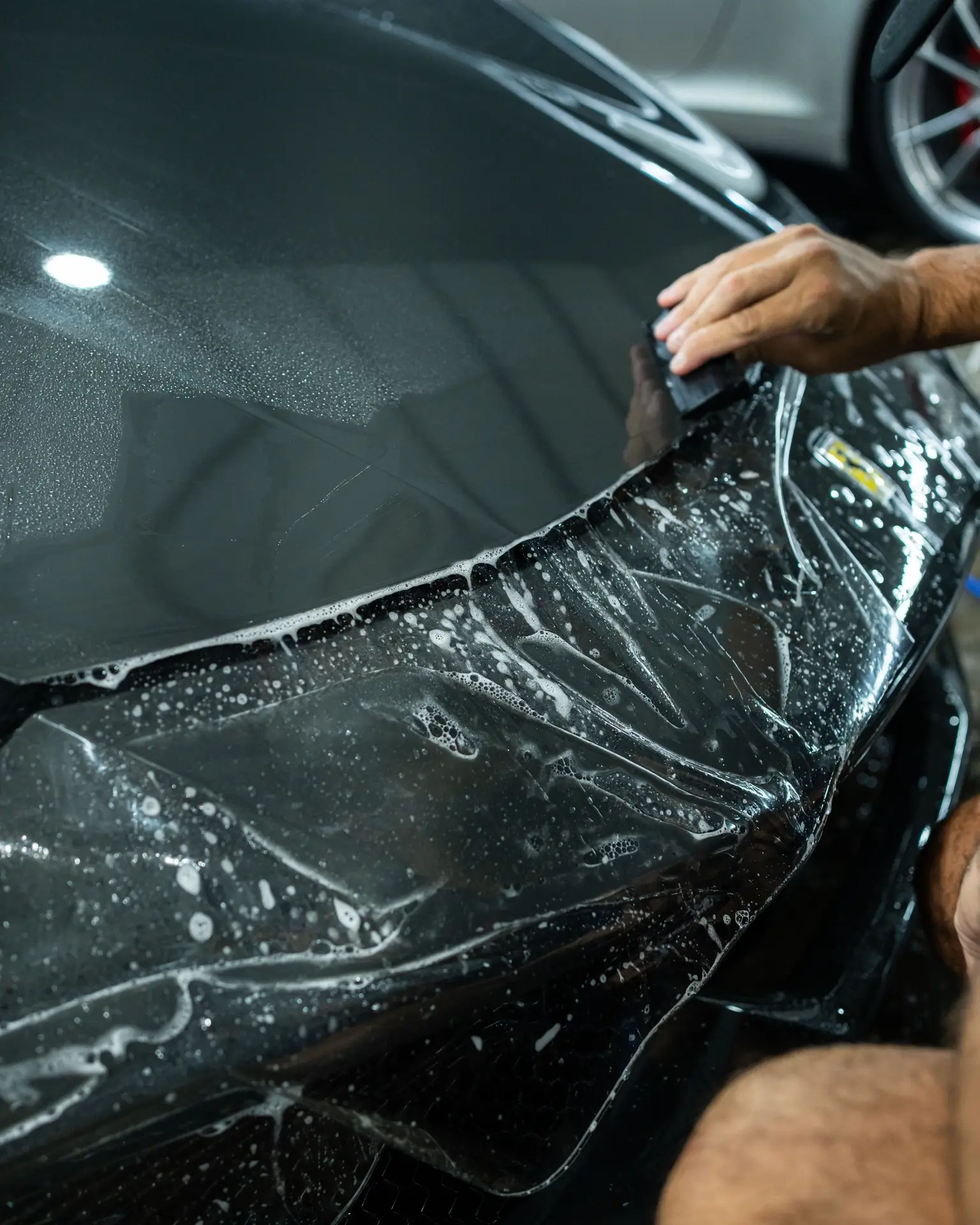
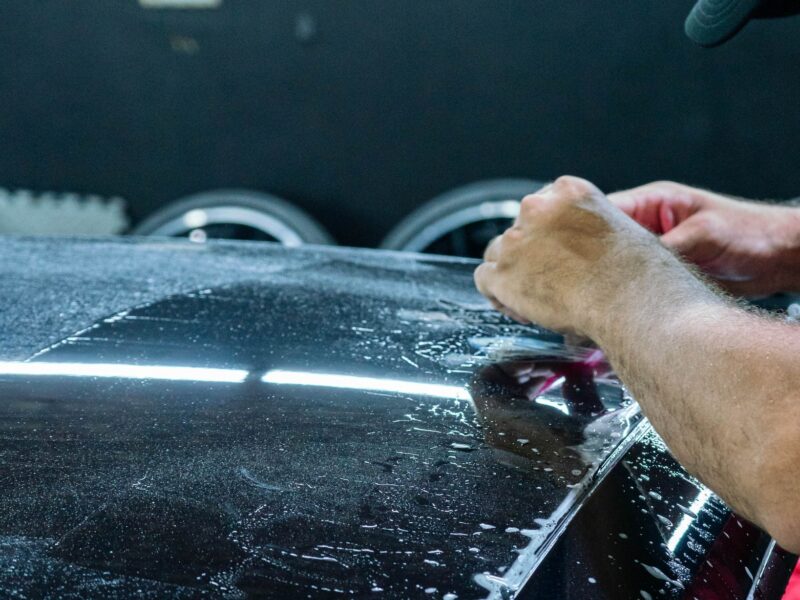
Paint protection film — PPF — operates as the physical layer. Self-healing at the surface, optically clear when installed with precision, and effective against stone chips and road debris that no coating alone can address. Installation quality determines everything. Poorly fitted film introduces edge lifting, contamination pockets, and premature failure. The work here is considered.
For collectors, the combination of paint correction followed by both ceramic coating and PPF represents the highest level of protection available for paintwork in regular service. The investment in car detailing at this standard is recoverable over the life of the vehicle. The cost of neglected paint is not.
These are often presented as alternatives. They are more accurately two different answers to two different questions.
Ceramic coating
Ceramic coating is a chemical bond — a semi-permanent layer applied to the clear coat that provides hydrophobic properties, chemical resistance, and enhanced gloss. It does not provide meaningful physical protection against stone chips or road abrasion. What it does do, exceptionally well, is make the surface easier to maintain, more resistant to environmental contamination, and significantly more durable than wax or sealant. A correctly applied ceramic coating on a corrected surface changes how the car looks — and how it performs in maintenance over the following years.
Paint protection film
Paint protection film is a physical barrier — a polyurethane film applied to high-impact areas that absorbs the energy of stone chips, road debris, and minor abrasion. Self-healing grades respond to heat by recovering light surface marks. PPF provides something no liquid coating can: genuine mechanical protection. On a vehicle regularly driven on South African roads — gravel sections, highways behind trucks, informal parking situations — the case for PPF on the bonnet and leading edges is difficult to argue against.
The most comprehensive approach combines both: PPF on the areas that need physical protection, ceramic on the panels that benefit from chemical protection and enhanced presentation. The decision depends on how the car is used, where it's driven, and what the owner is trying to protect. We don't have a default recommendation. We have a conversation after seeing the car.
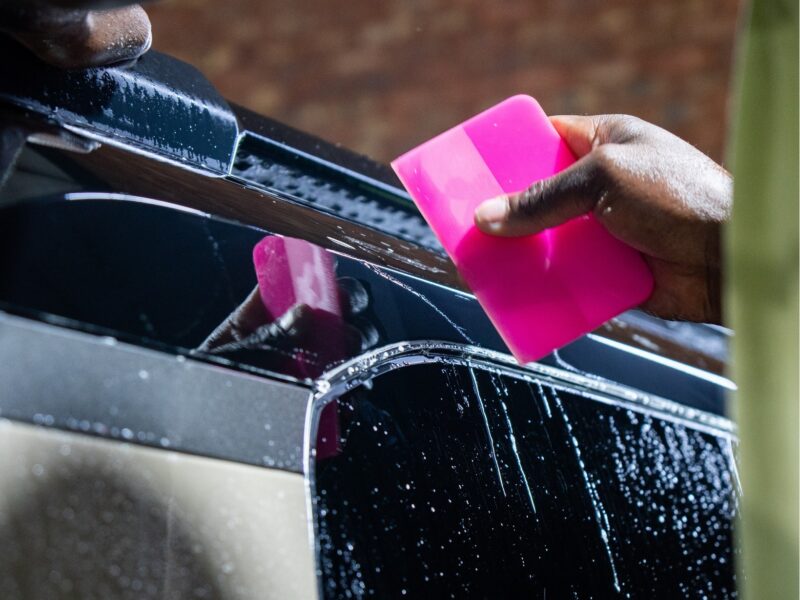
Paint protection film
A sacrificial physical barrier against stone chips and road debris. Self-healing. Precision installed. Invisible when done correctly — effective where coating alone cannot protect.
For collectors, the combination of paint correction followed by both ceramic coating and PPF represents the highest level of protection available for paintwork in regular service. The investment in car detailing at this standard is recoverable over the life of the vehicle. The cost of neglected paint is not.
Why PPF on South African roads
Paint protection film — PPF — operates as the physical layer. Self-healing at the surface, optically clear when installed with precision, and effective against stone chips and road debris that no coating alone can address.
On South African roads, the case for PPF on front-end surfaces is straightforward. The investment in protection at this standard is recoverable over the life of the vehicle. The cost of neglected paint is not.
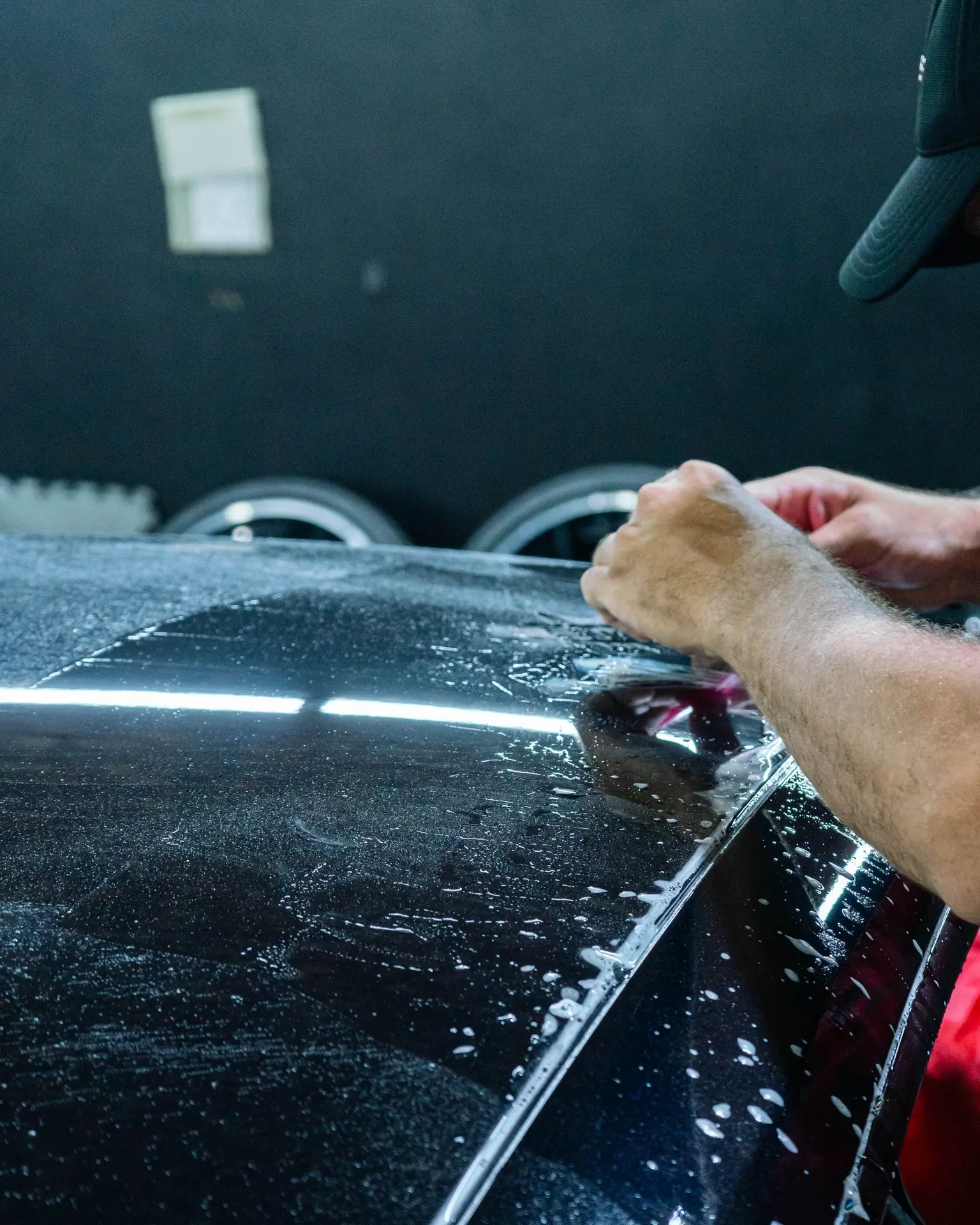
Installation quality determines everything. Poorly fitted film introduces edge lifting, contamination pockets, and premature failure. Coverage zones are chosen based on how the vehicle is used and where the risk is highest.

Full bonnet
The highest-impact zone on most driven vehicles. Stone chips concentrate here at speed. Full bonnet coverage is the single most effective PPF investment for a regularly driven car.
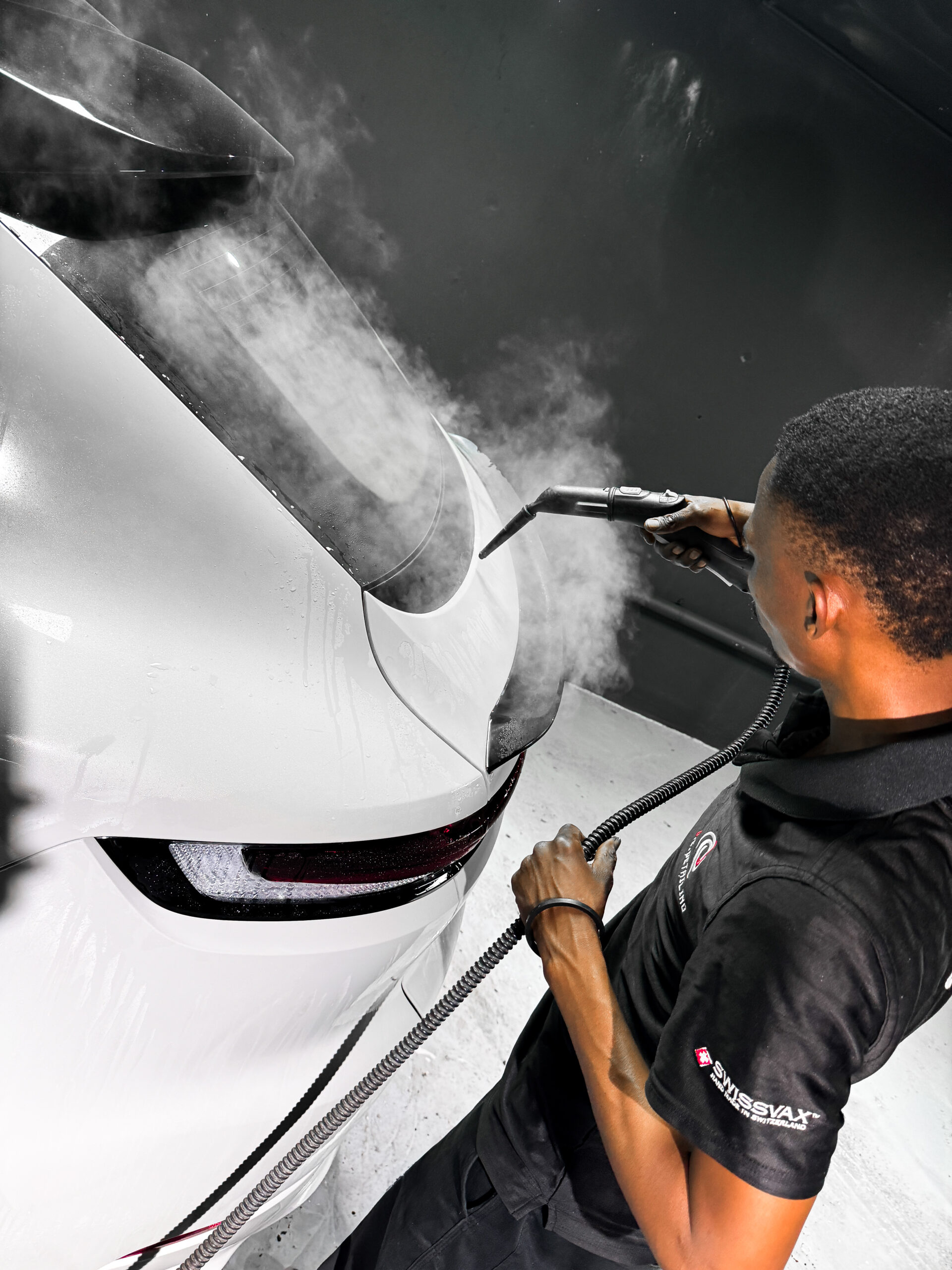
Front bumper
The lower leading edge takes the most debris. Often the first panel to show damage on unprotected vehicles. Coverage here is standard on any front-end PPF programme.
A-pillars & leading edges
Mirror backs, door edges, and leading roof pillars — vulnerable to chips and abrasion in traffic. Often overlooked in partial installs, and often the first areas to show stone damage on unprotected vehicles.
How PPF and ceramic coating work together
Ceramic coating provides a chemical bond with the clear coat, offering long-term resistance to UV degradation and environmental contamination. It does not stop stone chips.
PPF stops chips but cannot provide gloss enhancement or chemical protection on its own. The two are complementary — PPF on high-impact zones, ceramic on the remaining panels. Together they represent the most comprehensive protection available for paint in regular service.
Installation quality is the variable that separates good PPF work from work that fails within months. One real example of a completed install communicates that standard directly.
Stone chip damage — bonnet leading edge
Typical result after 18–24 months of regular highway use on an unprotected vehicle. Chips through to primer on the leading edge.
Same period — paint intact beneath film
Film surface shows impact marks. Paint below is undamaged. Film is replaceable at a fraction of the cost of a respray.
Interior and leather care
Paintwork is not the only surface that warrants attention. Interior materials — leather, Alcantara, carbon trim, switchgear — age according to how they are treated and how consistently.
Interior detailing at Auto Vault includes conditioning, deep cleansing, and surface protection appropriate to each material. Leather in sound condition is kept that way. Leather that has dried or begun to crack can, in many cases, be brought back to a workable condition. The approach is conservative: preservation first, intervention where it genuinely improves the outcome.
Why detailing matters for value — and beyond it
A vehicle in excellent documented condition commands a different conversation when the time comes to sell or arrange a private sale. That is the financial argument, and it is a straightforward one.
For owners who keep their cars rather than cycle them, the case is less transactional. A correctly maintained paint surface is a pleasure in a way that a neglected one is not. The difference between a car that has been properly cared for and one that hasn't is apparent before the door is opened — present in the light, in the depth of colour, in the condition of every surface encountered.
Car detailing in Pretoria, at the standard applied here, is a long-term decision.
Booking a detailing appointment
All detailing work begins with an assessment. The vehicle's current condition, the work required, and the owner's objectives are established before any scheduling is confirmed.
Initial contact by WhatsApp or email is the simplest route. A brief description of the vehicle and the nature of the enquiry — paint correction, coating application, PPF installation, interior care, or a full-programme approach — allows the right response. Vehicles currently in storage at The Vault can be scheduled for detailing without any change to the storage arrangement.
For major concours preparation, Auto Vault works in close partnership with OC Detailing — ensuring the standard required for competition-level presentation. Make an appointment enquiry.
Precision work, by appointment. Brooklyn, Pretoria.
Surface work at Auto Vault is carried out at the Brooklyn facility, by appointment. Walk-ins don't happen here — not because the threshold is artificially high, but because proper paintwork correction cannot be rushed, scheduled around other commitments, or treated as a while-you-wait service.
Pretoria's detailing community is a close-knit circle. Word circulates through collector and enthusiast networks across Waterkloof, Menlyn, and the surrounding suburbs — owners who've seen what poor polishing technique can do to a rare clear coat tend to be selective about who touches their cars. The clients who find their way to Auto Vault's detailing service generally arrive with specific requirements, prior experiences with less careful hands, and a clear sense of what a corrected, protected surface should look like.
The facility's studio environment allows accurate work under controlled lighting — a condition most workshops can't replicate, and that makes a material difference in how defects are identified, how correction is measured, and what passes final inspection. Collection and delivery is available across Pretoria. The car can come to us.
Surface questions, answered directly.
Paint correction is the process of removing surface defects from a vehicle's clear coat through controlled machine polishing — swirl marks, micro-scratches, oxidation, and buffer trails from previous detailing. The result is a surface that reflects light cleanly rather than scattering it. Correction is measured under studio lighting and documented before and after.
A properly applied professional-grade ceramic coating performs reliably for three to five years under normal conditions, and significantly longer with appropriate maintenance. Longevity is a function of preparation — a coating applied over an uncorrected surface will seal the defects beneath it. We always correct before we coat.
PPF is the right answer when physical protection from stone chips, road debris, and abrasion is the priority — particularly on front bumpers, bonnets, and leading edges. It is a sacrificial barrier, and a self-healing one. For vehicles regularly driven on South African roads, the case for PPF on high-impact areas is straightforward. We assess each vehicle individually and give an honest recommendation.
Yes. Concours preparation is a defined process: full decontamination, multi-stage correction to the level each panel requires, appropriate protection, and presentation detailing. The standard applied is the one a judge applies at close range under direct light. If a vehicle is entering a concours event, that context informs every decision we make during preparation.
Collection and delivery across Pretoria is available by arrangement. For vehicles where open-road transport isn't appropriate, enclosed trailer delivery can also be coordinated. The logistics of getting a car to us don't have to be a reason to defer the work.
It depends on what the vehicle needs. A paint correction and ceramic coating on a modern prestige car typically runs two to four days. A more involved concours preparation or multi-stage correction on an older vehicle with layered damage can run longer. We give a clear estimate after the initial assessment — not before.
A car wash removes surface contamination. Precision detailing addresses what's below the surface — paint defects, contamination embedded in the clear coat, chemical etching, fading, and oxidation. The tools, compounds, and process are categorically different, and so are the standards applied during and after the work. The objective isn't a clean car. It's a correct one.
Yes, and carefully. Older clear coats, single-stage paints, and aged lacquers require a different approach than modern two-stage finishes — lower aggression, more assessment before committing to correction, and a genuine understanding of how the paint was originally applied. We've worked on vehicles where the original finish was worth preserving rather than replacing, and we approach those with appropriate caution.