There is a version of this article that reassures you everything is fine. That the T-Hybrid is just another evolution in a long line of Porsche evolutions. That the purists were wrong about water cooling, wrong about the 996, and they are probably wrong again now.
That version is too easy.
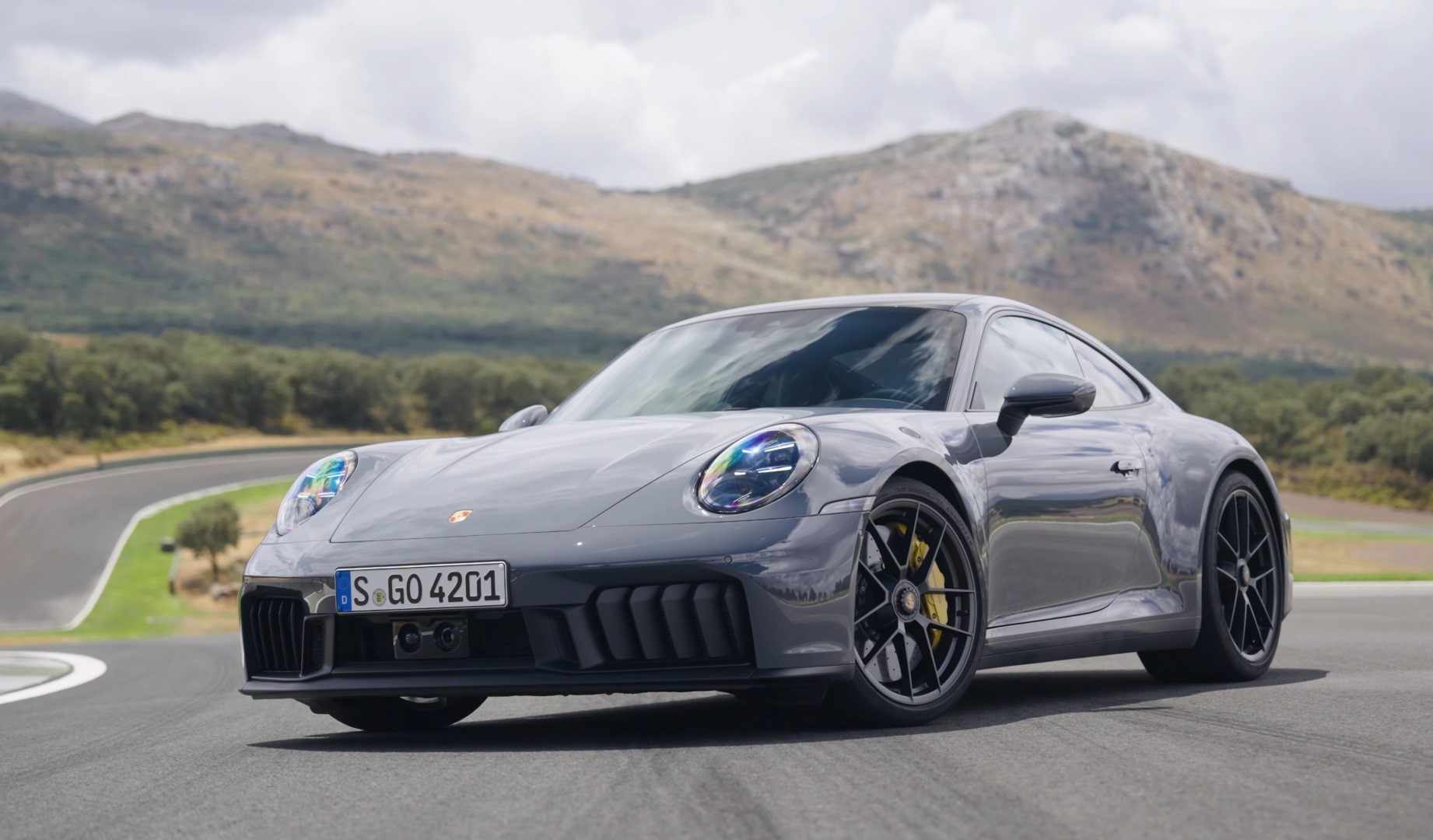
The 992.2 GTS is a genuinely different proposition from every 911 that came before it — not because of what it lost, but because of what it introduced. A high-voltage battery. An electric turbocharger. A powertrain architecture that no South African independent workshop has meaningful experience with yet. For buyers in this market, those details matter in ways they do not in Germany or the United States.
This is not a case against the car. It is a case for understanding what you are actually buying — or selling.
What the T-Hybrid System Actually Is
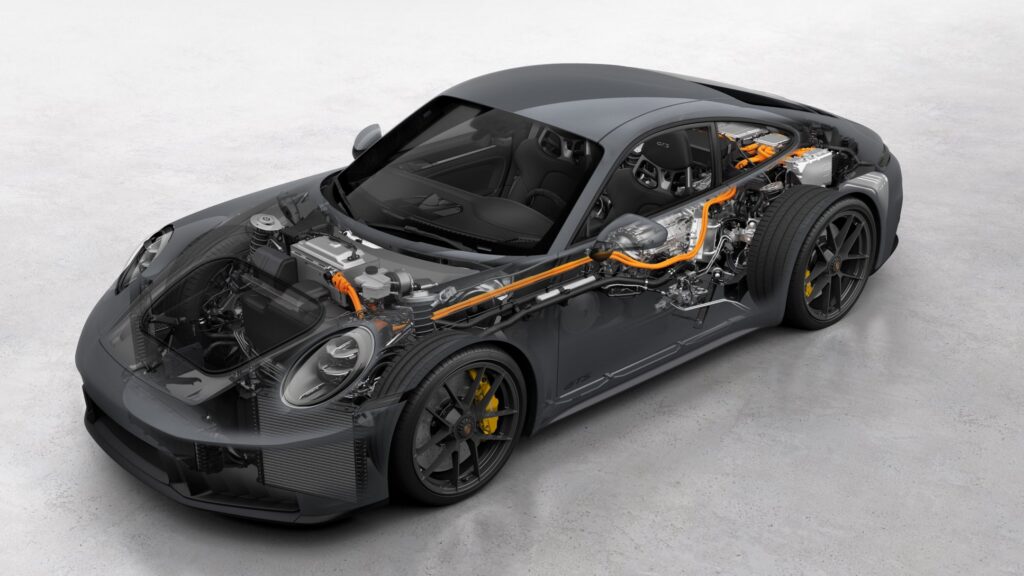
Porsche’s T-Hybrid is not a conventional hybrid. There is no plug. There is no electric-only range. The system exists to do one thing: close the throttle response gap that forced induction inevitably creates, while allowing the engine to meet increasingly strict European emissions targets.
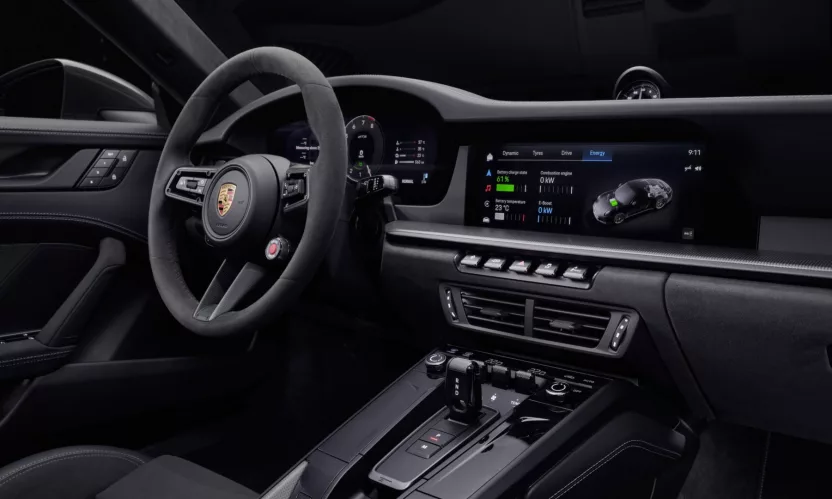
The setup pairs a 3.6-litre flat-six — enlarged from the outgoing 3.0 — with an electric motor integrated into the eight-speed PDK gearbox, and an electric exhaust gas turbocharger. A 1.9 kWh, 400-volt lithium-ion battery pack lives under the front hood. The electric motor contributes 40 kW. The electric turbocharger spins instantly on demand, eliminating the lag window that even the best conventional turbos produce at partial throttle.
The result is 398 kW and 610 Nm. The 992.2 GTS reaches 100 km/h in 3.0 seconds and is 8.7 seconds faster around the Nürburgring than its predecessor, despite weighing around 47 kg more.
On paper — and by every independent account from those who have driven it — the system works. It works in a way that does not feel like a hybrid. There is no torque surge, no mode switching, no character split between combustion and electric. The car is simply faster and more responsive than any previous GTS.
But the question that matters to SA buyers is not whether the car is good. It is what it costs to own, and what it does to the market around it.
The SA Context: Three Questions That Matter Here
1. What happens when the battery or electric turbocharger needs attention?
Porsche South Africa aligns with the global 8-year/160,000 km high-voltage battery warranty. That is meaningful protection for an initial owner. The battery is also a comparatively compact unit — roughly the dimensions of a standard 12-volt battery — located in the front compartment, which makes replacement far more straightforward than the under-floor packs in a Taycan or any conventional EV.
The electric turbocharger is a different consideration. It is deeply integrated into the drivetrain and is a component that no independent Porsche specialist in South Africa has had meaningful volume experience with yet. That is not a reason to avoid the car. It is a reason to be clear-eyed about the fact that, for the foreseeable future, anything beyond routine servicing will route through an authorised Porsche centre — at authorised Porsche centre rates.
For clients in Pretoria and Johannesburg, that is manageable. For buyers in secondary markets, or buyers who have historically used well-regarded independents to manage running costs on high-spec 911s, it is a cost-of-ownership conversation that needs to happen before purchase, not after.
2. What does the 992.2 GTS do to the value of a 992.1 GTS?
This is the question we are fielding most from clients right now.
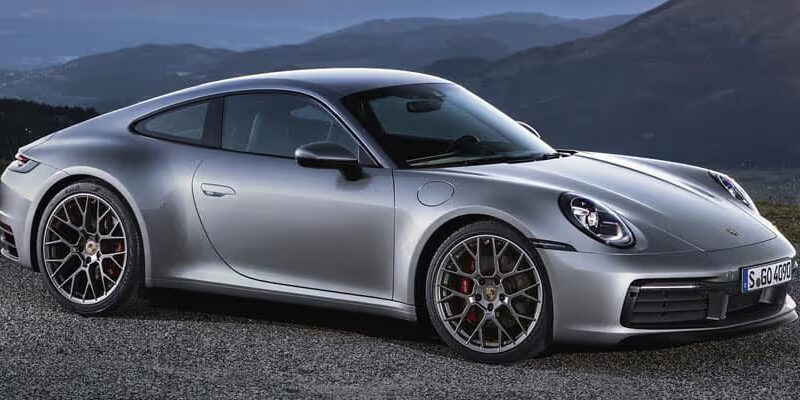
The honest answer: it is still early, and the used car market in South Africa absorbs change more slowly than Europe. But the directional read is clear. Any time Porsche introduces a meaningfully different powertrain at the GTS tier, it reframes what came before. The 992.1 GTS — a 3.0-litre twin-turbo, no hybrid, no electric components — now becomes the last of a type. Specifically, the last GTS that any independent can work on without specialist hybrid tooling.
That has two possible effects on value. For the buyer who wants a performance 911 without the hybrid architecture, the 992.1 GTS becomes more attractive, not less. It is the car you fully understand from a cost and maintenance perspective. For the buyer who follows specifications and depreciation curves closely, the introduction of a more capable car above it in the timeline applies the usual downward pressure.
What we are watching closely is whether the 992.1 GTS holds value better than typical pre-facelift Carreras — because of that “last naturally combustion-only GTS” narrative — or whether it depreciates in line with the broader pattern. Based on what we are seeing in the private dealer network currently, well-specified low-mileage 992.1 GTS cars are holding firmer than the depreciation models would predict.
3. Is now the right time to sell a 992.1, or source a 992.2?
That depends on what you want from the car.
If you own a 992.1 GTS and you drive it regularly, love it, and are not motivated by having the newest specification — there is no urgency to move. The car is not becoming obsolete. It is becoming the analogue option in a segment that is moving toward electrification, which has historically held collector value well.
If you are sourcing a performance 911 right now and budget allows, the 992.2 GTS is the better car in every measurable performance dimension. The T-Hybrid system will mature in the SA market, and the warranty position at purchase means your exposure on the battery is limited for the first eight years.
The case for a 992.1 in the current market is about specificity of use and clarity of ownership costs — not about the car being more driver-focused. The T-Hybrid GTS is arguably more driver-focused than its predecessor by the metric that matters most: how the car responds when you ask it for something.
What This Means for the SA Performance Car Market More Broadly
The 992.2 GTS is not an isolated event. It is the opening chapter of a pattern that will move through the 911 range. The Turbo S hybrid variant has been confirmed. There is credible speculation that the GT3 will eventually follow. The direction is set.
For buyers and sellers in this market, the practical implication is that the window for transacting in pre-hybrid 911 variants — at predictable, well-understood ownership costs — is finite. Not closed. Finite.
The private network through which most performance 911 transactions in Pretoria and Johannesburg actually happen is already reflecting that. Sellers who understand the timing are positioning well-kept 992.1 GTS cars carefully. Buyers who have been sitting on the decision are beginning to move.
The 992.2 GTS is a significant car. It deserves a considered response — not the knee-jerk rejection of the purist, and not the uncritical enthusiasm of the press release. For SA buyers, the conversation needs to include the workshop landscape, the warranty position, the used market dynamics, and the broader trajectory of where the 911 range is heading.
That is the conversation we are equipped to have.
If you are weighing a 992.1 GTS or considering sourcing a 992.2 — or both — we are happy to talk through what the market actually looks like right now. By arrangement.